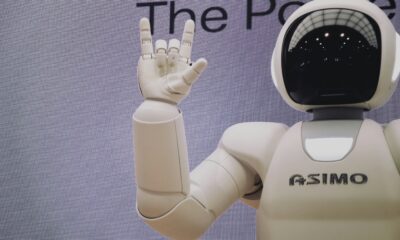
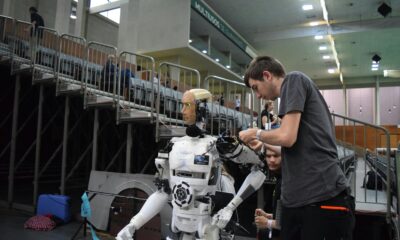
Humanoid robots are revolutionizing the way education is delivered, creating innovative learning environments and engaging experiences for students. These robots not only assist teachers in delivering lessons but also act as educational tools that help children and adults develop skills for the future. With the power of artificial intelligence (AI), machine learning, and human-like interaction, humanoid robots are proving to be valuable assets in the classroom.
1. Engaging Students with Interactive Learning
One of the key benefits of humanoid robots in education is their ability to engage students in a way that traditional methods may not. Unlike static textbooks or lectures, humanoid robots are capable of interacting with students, responding to their queries, and providing personalized feedback.
-
Interactive Teaching Assistants: Robots like SoftBank Robotics’ Pepper are being used as teaching assistants in schools around the world. These robots can engage with students, ask them questions, and even explain complex concepts in a simplified manner. They provide instant feedback to students, making learning more dynamic and enjoyable.
-
Gamified Learning: Humanoid robots can also integrate gamified learning experiences. By using AI and machine learning algorithms, robots can create interactive quizzes, challenges, and educational games that motivate students to participate actively. Gamification has been shown to increase student engagement and retention, making it an effective learning tool.
-
Personalized Learning: Humanoid robots can adapt their lessons based on individual student progress. By using sensors and AI, robots can monitor how well a student is grasping concepts and adjust the difficulty level accordingly. This personalized approach ensures that every student can learn at their own pace, leading to better outcomes.
Applications:
-
Language learning and practice
-
Personalized tutoring and academic assistance
-
Engaging activities and games to reinforce learning
2. Assisting Students with Special Needs
Humanoid robots are also making a significant impact in special education, providing support to students with disabilities. These robots can be used to help children with autism, learning disabilities, and other challenges by offering personalized support and creating an inclusive learning environment.
-
Social Skills Training: Robots can act as companions for children with autism, helping them practice social interactions and communication. By mimicking human behavior, robots like SoftBank’s Pepper are helping students improve their social skills and emotional awareness.
-
Cognitive and Motor Skill Development: For students with physical disabilities or developmental delays, humanoid robots can assist in improving cognitive and motor skills. These robots can guide children through exercises designed to enhance fine motor skills, hand-eye coordination, and problem-solving abilities.
-
Assistive Technology: Humanoid robots can also serve as assistive technology, helping students with disabilities access learning materials and engage with their peers. Robots can read aloud to visually impaired students, help with mobility, or even provide verbal communication for non-verbal children.
Applications:
-
Social interaction and communication for children with autism
-
Cognitive and motor skill development for children with disabilities
-
Assistive tools for visually impaired or non-verbal students
3. Teachers’ Support and Classroom Management
While humanoid robots are transforming how students learn, they are also providing valuable support to teachers. In busy classrooms, teachers often struggle to meet the needs of every student. Humanoid robots can help alleviate some of these challenges, allowing teachers to focus on higher-level tasks such as lesson planning and personalized instruction.
-
Administrative Assistance: Humanoid robots can handle administrative tasks like taking attendance, distributing assignments, or grading multiple-choice tests. By automating these tasks, robots free up teachers’ time, allowing them to focus on more meaningful interactions with students.
-
Classroom Management: Robots can also assist in managing classroom behavior. For example, they can interact with students to redirect disruptive behavior or reinforce positive behavior. Robots equipped with sensors can monitor the classroom and provide feedback to students on their actions, encouraging them to stay on task.
-
Providing Feedback and Assessments: Humanoid robots are able to provide students with instant feedback on their work. For example, a robot might assess a student’s writing assignment or math problem and offer suggestions for improvement, enabling students to learn and grow in real-time.
Applications:
-
Administrative tasks like attendance and grading
-
Classroom behavior monitoring and management
-
Providing instant feedback on student work
4. Preparing Students for the Future: Teaching Digital Literacy
As technology continues to evolve, it is crucial that students are prepared for the digital world. Humanoid robots help teach students about AI, robotics, and other advanced technologies, fostering skills that will be essential in future careers.
-
STEM Education: Humanoid robots are great tools for teaching science, technology, engineering, and mathematics (STEM) concepts. Students can interact with robots, learning about the underlying principles of robotics, artificial intelligence, and automation. This hands-on approach to STEM education enhances problem-solving, critical thinking, and creativity.
-
Coding and Programming: Many humanoid robots are equipped with coding interfaces that allow students to program them to perform specific tasks. By teaching students how to code robots, educators are helping them develop essential programming skills that will be valuable in the tech-driven future job market.
-
Ethics and AI: As robots become increasingly integrated into society, it’s important to teach students about the ethical implications of AI and automation. Humanoid robots can be used as a tool to discuss these important topics, helping students understand the responsibilities that come with creating and interacting with intelligent machines.
Applications:
-
STEM education and problem-solving
-
Learning coding and programming
-
Discussing ethics and the future of AI
5. The Challenges and Future of Humanoid Robots in Education
While the potential of humanoid robots in education is enormous, there are still several challenges that must be addressed before they become a common presence in classrooms worldwide.
-
Cost and Accessibility: Humanoid robots are still expensive, and many schools may not have the budget to integrate them into their curriculum. As technology advances, however, the cost of robots is likely to decrease, making them more accessible to educational institutions.
-
Teacher Training: Teachers will need to be trained in how to effectively use humanoid robots in the classroom. It is essential that educators understand how to incorporate robots into their lessons and use them as effective tools for learning.
-
Ethical Considerations: The use of robots in education raises ethical concerns, such as privacy and data security. Ensuring that students’ personal data is protected and that robots are used in a way that supports, rather than replaces, human interaction will be essential.
Conclusion:
Humanoid robots are already making a significant impact in education by providing interactive learning experiences, assisting students with special needs, and supporting teachers in their classrooms. As technology continues to advance, we can expect robots to play an even larger role in shaping the future of education. With the ability to engage students, teach valuable skills, and create inclusive learning environments, humanoid robots are helping to prepare the next generation for a world that is increasingly shaped by technology.

















tst
2016-10-07 at 3:35 AM
test