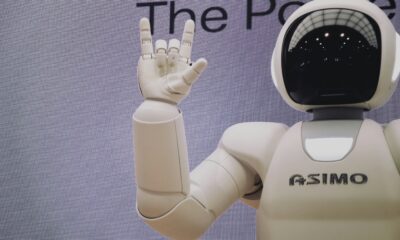
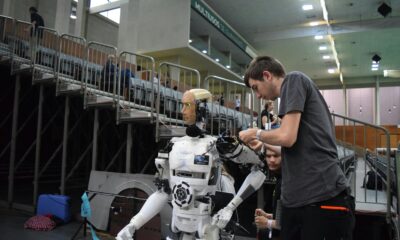
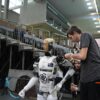
These robots are not only designed to assist in medical procedures but also to offer companionship and support to patients, particularly the elderly or those with special needs. As humanoid robots continue to evolve, their applications in healthcare are expanding, offering new possibilities for both doctors and patients.
The Role of Humanoid Robots in Healthcare Assistance
One of the most significant benefits of humanoid robots in healthcare is their ability to assist medical professionals with routine tasks, enabling doctors and nurses to focus on more critical aspects of care. Robots can be used for administrative tasks such as managing patient records, scheduling appointments, or even taking vitals, streamlining hospital operations and reducing the burden on human staff.
For example, robots equipped with AI-powered systems can take a patient’s temperature, measure their heart rate, and even collect basic information about their condition. This data can then be processed in real-time, allowing healthcare professionals to make faster, more informed decisions about patient care. The use of humanoid robots for these tasks not only improves efficiency but also helps reduce human error, ensuring that patients receive accurate and timely care.
Robots in Surgery: Precision and Assistance
Humanoid robots are also making significant strides in the field of surgery. While traditional surgical robots, such as the da Vinci Surgical System, have been in use for years, humanoid robots are designed to offer a more human-like approach to surgical assistance. These robots can be equipped with advanced AI algorithms that allow them to assist with delicate procedures, providing surgeons with enhanced precision and real-time data analysis.
In some cases, humanoid robots can be used to perform minimally invasive surgeries, such as laparoscopic procedures, where precision is crucial. These robots are often equipped with high-definition cameras and specialized instruments that allow surgeons to see inside the body with great detail, improving their ability to make accurate incisions and perform complex procedures with minimal disruption to surrounding tissues.
Moreover, humanoid robots can be used to assist surgeons in the operating room by holding instruments or providing additional support during lengthy procedures. With their human-like dexterity and ability to manipulate tools with great accuracy, humanoid robots can reduce the strain on surgeons and improve the overall efficiency of the surgery process.
Humanoid Robots as Caregivers for the Elderly
Another important area where humanoid robots are making an impact is in eldercare. With aging populations around the world, the demand for caregivers is increasing. However, there is a shortage of trained healthcare professionals who can meet these needs. Humanoid robots are stepping in to bridge this gap, offering support and companionship to elderly individuals who may otherwise be isolated or in need of assistance.
For example, robots like Pepper and Robear have been designed to assist elderly individuals with tasks such as mobility, personal care, and even social interaction. Robear, developed by RIKEN and Sumitomo Riko Company, is a humanoid robot designed to help lift patients from their beds and assist with movement, reducing the physical strain on caregivers. Similarly, Pepper, a humanoid robot developed by Softbank Robotics, is used in healthcare settings to interact with patients, provide entertainment, and offer emotional support.
These robots can help seniors with daily tasks such as reminding them to take medications, helping them with mobility issues, or even providing companionship through simple conversations. By offering assistance and emotional support, humanoid robots can improve the quality of life for elderly individuals, helping them maintain their independence while ensuring they receive the care they need.
Humanoid Robots for Therapy and Rehabilitation
Humanoid robots are also being used in therapeutic and rehabilitation settings to aid patients in their recovery process. In physical therapy, for example, robots can be programmed to guide patients through a series of exercises or movements that are designed to improve mobility and strength after an injury or surgery.
These robots can offer a more consistent and controlled approach to rehabilitation, ensuring that patients follow their prescribed exercise routines and receive feedback on their progress. By providing real-time data on a patient’s performance, humanoid robots can help healthcare providers track recovery and make adjustments to therapy plans as needed.
In addition, humanoid robots are being used in cognitive therapy, particularly for individuals with conditions such as dementia or Alzheimer’s disease. These robots can engage patients in memory exercises, provide cognitive stimulation, and even offer emotional support through social interaction, helping to reduce feelings of isolation and improve mental well-being.
The Emotional and Psychological Impact of Humanoid Robots
Beyond their physical and medical capabilities, humanoid robots also have a significant emotional and psychological impact on patients. For many people, especially the elderly or those in long-term care, the companionship provided by humanoid robots can be incredibly valuable. The ability to interact with a robot that responds to emotions, offers comforting words, and provides a sense of presence can help combat feelings of loneliness and depression.
Studies have shown that robots like Pepper can help reduce anxiety and stress in patients, particularly in environments like hospitals where patients may feel overwhelmed or uncertain about their condition. Humanoid robots equipped with emotional AI can sense changes in a patient’s mood or behavior and respond accordingly, offering calming gestures or reassurances when needed.
For patients with dementia or cognitive disorders, humanoid robots can serve as a source of comfort and familiarity. These robots can offer repetitive tasks or reminders, helping patients feel more secure and grounded in their daily lives. Additionally, robots can engage in simple conversations or activities that stimulate cognitive function, contributing to the overall well-being of patients.
Challenges and Ethical Considerations
While humanoid robots offer significant advantages in healthcare, their use also raises several ethical considerations. One of the primary concerns is the potential for dependency on robots, particularly for elderly individuals. As humanoid robots become more integrated into caregiving roles, there is the risk that patients may become overly reliant on them, leading to a diminished human connection and potential social isolation.
Additionally, there are concerns about privacy and the data that humanoid robots collect. These robots are often equipped with sensors and cameras that can monitor patients’ movements, health metrics, and even emotions. It is crucial that healthcare providers ensure the security of this data and that patients’ privacy is respected at all times.
Finally, there are questions about the ethics of replacing human caregivers with robots. While robots can provide valuable support, they cannot replace the emotional and empathetic care that human caregivers offer. As such, the role of humanoid robots in healthcare should be viewed as complementary to human care, rather than a complete replacement.
The Future of Humanoid Robots in Healthcare
As technology continues to advance, the role of humanoid robots in healthcare is expected to expand. In the future, we may see robots that are even more sophisticated in terms of their physical abilities, emotional intelligence, and integration into healthcare settings. These robots will not only assist with medical procedures and daily tasks but will also play a significant role in mental health, therapy, and patient engagement.
The future of humanoid robots in healthcare looks promising, offering new opportunities to enhance patient care, reduce the strain on healthcare workers, and improve the overall healthcare experience for patients. As the technology continues to develop, humanoid robots may become an integral part of the healthcare ecosystem, providing support and assistance to both patients and professionals alike.