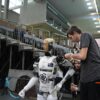
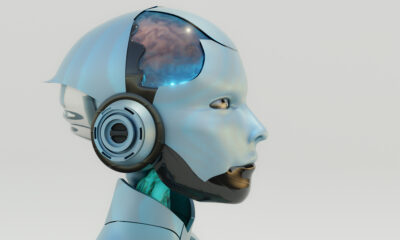
Humanoid robots are not just futuristic assistants or industrial tools; they are also transforming the field of scientific research. With their ability to perform precise, repetitive, and highly controlled tasks, humanoid robots are becoming valuable assets in laboratories, space exploration, medical research, and artificial intelligence development.
1. Why Scientists Use Humanoid Robots in Research
Scientific research often involves conducting highly precise and repetitive tasks, which can be tedious or even impossible for human researchers. Humanoid robots offer several key advantages:
1.1. Consistency and Precision
-
Unlike humans, robots do not experience fatigue or inconsistency in their actions. This is crucial in biomedical and pharmaceutical research, where precision is essential.
-
Robots can handle microscopic adjustments, ensuring accuracy in experiments that require minute measurements.
1.2. Safety in Hazardous Environments
-
Humanoid robots can be deployed in radioactive environments, toxic chemical research, or disease containment labs, reducing human exposure to dangerous substances.
-
In physics research, robots can assist in handling high-voltage equipment or extreme temperature experiments.
1.3. Automation for Increased Efficiency
-
Robots work 24/7 without breaks, speeding up long-term studies such as drug testing, genetic sequencing, or material science experiments.
-
AI-powered humanoid robots can analyze data in real time, reducing the workload for human researchers.
These advantages have led to the rapid adoption of humanoid robots in various fields of science.
2. Humanoid Robots in Biomedical and Pharmaceutical Research
One of the most significant applications of humanoid robots in research is in medicine and pharmaceuticals, where precision, sterility, and efficiency are critical.
2.1. Drug Discovery and Testing
-
Automated lab robots can rapidly test thousands of chemical compounds for potential drug development.
-
Humanoid robots can conduct cell culture experiments, reducing human error in biomedical research.
2.2. Robotic Simulations for Human Health
-
Some humanoid robots simulate human physiological responses, helping researchers study drug effects before clinical trials.
-
Robots like TMSUK’s “Simroid” are used in medical training, allowing doctors to practice procedures in a controlled environment.
By using robots for early-stage research, scientists can accelerate medical breakthroughs and reduce reliance on human test subjects.
3. Humanoid Robots in Space Exploration
Space agencies, including NASA, ESA, and Roscosmos, are investing in humanoid robots to assist astronauts and conduct experiments in extreme space environments.
3.1. Space Robotics for Exploration
-
NASA’s Robonaut is a humanoid robot designed to assist astronauts with routine tasks on the International Space Station (ISS).
-
Humanoid robots are being tested for Mars and lunar exploration, where they can perform dangerous tasks like setting up equipment or repairing spacecraft.
3.2. Simulating Human Movement in Zero Gravity
-
Humanoid robots are being used in zero-gravity experiments to study human biomechanics in space.
-
AI-powered robots analyze how muscles and bones react to space conditions, helping scientists design better astronaut training programs.
Humanoid robots could one day become permanent crew members on space missions, supporting astronauts in both research and survival tasks.
4. AI-Powered Humanoid Robots in Scientific Computing
Artificial intelligence (AI) is at the core of modern scientific discovery, and humanoid robots are playing a key role in its advancement.
4.1. Machine Learning Experiments
-
AI-driven humanoid robots help train machine learning models by providing real-world interactions for reinforcement learning.
-
Robots like Sophia from Hanson Robotics participate in AI experiments to improve natural language processing and cognitive computing.
4.2. Robotics in Quantum Computing Research
AI-powered humanoid robots will continue to push the boundaries of computing and automation, enabling breakthroughs in multiple disciplines.
5. Robots in Environmental and Climate Research
Climate change research often involves working in harsh or remote environments, making humanoid robots valuable assets.
5.1. Arctic and Deep-Sea Exploration
-
Humanoid robots equipped with pressure-resistant bodies are being used to explore deep-sea ecosystems, gathering climate data.
-
Robots are also deployed in polar regions to study ice melting patterns and greenhouse gas emissions.
5.2. Disaster Simulation and Environmental Monitoring
-
Robots are used in simulating natural disasters like earthquakes and tsunamis, helping scientists develop better early warning systems.
-
AI-driven humanoid robots analyze deforestation rates, air quality, and pollution levels, supporting climate research.
Robots are becoming key players in understanding and mitigating environmental challenges.
6. Ethical Considerations and Challenges of Using Humanoid Robots in Research
While humanoid robots bring immense benefits, they also raise ethical and technical concerns.
6.1. Dependence on AI and Automation
-
Over-reliance on robots may reduce human involvement in scientific discovery, potentially slowing innovation in some areas.
-
AI-powered robots must be programmed to prevent bias, ensuring that research findings remain accurate and impartial.
6.2. Data Privacy in AI Experiments
-
Robots that interact with human subjects collect large amounts of personal data, raising privacy concerns.
-
Regulations must ensure that scientific research using robots follows strict ethical guidelines.
Addressing these challenges is essential for the responsible use of robotics in science.
7. The Future of Humanoid Robots in Research
As technology advances, humanoid robots will become even more sophisticated, playing a larger role in scientific breakthroughs.
7.1. Self-Learning Robots for Experimentation
-
Future humanoid robots will design and conduct experiments autonomously, accelerating scientific discovery.
-
AI-powered robots could generate hypotheses and test them in real-time, reducing the need for human intervention.
7.2. Integrating Humanoid Robots with Biotechnology
-
Scientists are developing biorobotics, where robots integrate organic tissues with synthetic components to mimic human biology.
-
These robots could revolutionize medical research, offering better models for drug testing and organ regeneration studies.
7.3. Robots as Research Partners
-
Instead of replacing scientists, humanoid robots will act as collaborative partners, assisting in complex research tasks.
-
Robotics labs are developing human-robot teamwork models, ensuring seamless interaction between researchers and AI-driven assistants.
Humanoid robots will continue to drive progress across multiple scientific disciplines, making discoveries faster and more efficient.
Humanoid robots are proving to be indispensable tools in scientific research, from space exploration to medical advancements. Their ability to work with precision, endure harsh conditions, and process vast amounts of data is accelerating discoveries in fields once limited by human constraints.
As robotics and AI continue to evolve, the role of humanoid robots in research will only expand, opening new possibilities for innovation and technological progress.
By integrating robots into laboratories, space missions, and environmental studies, scientists are paving the way for a future where humanoid robots are central to the pursuit of knowledge.