From healthcare and retail to manufacturing and customer service, these robots promise to revolutionize sectors by enhancing productivity and improving user experiences. However, with high development and operational costs, the question arises: are humanoid robots truly worth the investment? This article explores the economics of humanoid robots, examining their costs, potential returns, and overall financial viability.
The High Cost of Developing Humanoid Robots
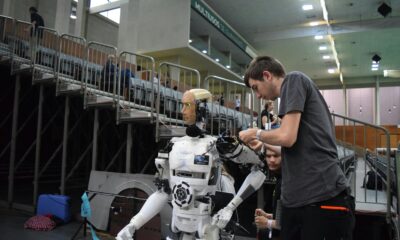
The creation of humanoid robots requires significant investment in research and development (R&D), materials, and labor. The development process involves a combination of advanced AI, robotics engineering, machine learning, and human-like design elements. Each component, from sensors and cameras to motors and actuators, needs to be carefully crafted to ensure that the robot mimics human movements and interactions as closely as possible.
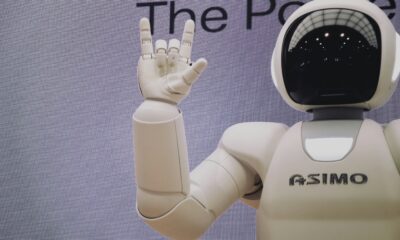
The initial cost of developing humanoid robots is often prohibitive, as companies must invest in specialized equipment, talented engineers, and extensive testing. For example, developing a humanoid robot like Sophia or ASIMO involves a team of experts in AI, robotics, and mechanical engineering, with millions of dollars in R&D required just to create a working prototype.
Additionally, humanoid robots are typically built with high-end materials, including lightweight alloys and specialized plastics, to ensure that they are durable yet mobile. The cost of manufacturing humanoid robots can vary greatly depending on their complexity and purpose, but it is often higher than that of traditional industrial robots, which are more specialized in their functions.
Operational Costs and Maintenance
Once humanoid robots are developed and deployed, they incur ongoing operational costs. These include maintenance, software updates, electricity, and labor to ensure that the robots are functioning correctly. Since humanoid robots are designed to perform complex tasks and interact with humans, they require regular servicing to maintain optimal performance.
For instance, a humanoid robot used in customer service must undergo frequent software updates to improve its language processing capabilities, enhance its emotional intelligence, and adjust to changing customer needs. Furthermore, these robots require periodic hardware maintenance to ensure that their motors, sensors, and AI systems are functioning correctly. The maintenance of humanoid robots can thus become an ongoing expense for businesses that rely on them for customer-facing roles or complex operations.
The cost of electricity and other utilities needed to power humanoid robots can also add up over time, especially in industries where robots are used continuously for long hours. While humanoid robots may reduce labor costs in certain areas, the operational costs must be factored into the financial equation to determine their true profitability.
Potential Returns on Investment (ROI)
Despite their high upfront and operational costs, humanoid robots offer significant potential returns on investment. Businesses that deploy humanoid robots can realize cost savings and productivity gains in several ways:
-
Increased Efficiency: Humanoid robots can handle repetitive tasks such as data entry, customer interactions, or inventory management, which frees up human employees to focus on higher-level tasks. In sectors like retail and hospitality, robots can assist customers with inquiries, manage stock, and handle basic services, thereby reducing the need for human workers in entry-level positions. This can lead to long-term savings on labor costs and increased operational efficiency.
-
Enhanced Customer Experience: Humanoid robots, especially those equipped with advanced AI and natural language processing capabilities, can provide customers with a more engaging and personalized experience. For example, robots in retail stores can guide customers through product selections, provide real-time inventory updates, and answer questions with a human-like demeanor. This enhances customer satisfaction and can lead to higher sales and repeat business.
-
Improved Productivity: In manufacturing and logistics, humanoid robots can work alongside human employees to improve productivity and reduce workplace injuries. Robots equipped with advanced sensors can handle dangerous or physically demanding tasks, reducing the risk of accidents and increasing the overall throughput of a production line. This can result in fewer workplace injuries, lower insurance costs, and improved employee morale.
-
Long-Term Scalability: As technology advances, the cost of producing humanoid robots is expected to decrease. Over time, businesses that invest in humanoid robots can scale their operations more effectively by deploying additional robots at a lower cost, leading to even greater returns. The potential for scaling up and increasing the scope of robotic automation makes humanoid robots an attractive long-term investment for businesses looking to stay competitive in an increasingly automated world.
Humanoid Robots in Service Industries: A Case Study in Retail
One of the most prominent applications of humanoid robots is in the service industry, particularly retail. Retailers like Lowe’s and SoftBank have already begun integrating humanoid robots into their stores to assist customers, manage inventory, and improve the shopping experience. The robots are equipped with AI to interact with customers, answer questions, and guide them to the products they are looking for.
In the case of Lowe’s, the company deployed a humanoid robot called LoweBot, designed to help customers find products and assist with inventory management. The robot can navigate the store autonomously, interact with customers using natural language, and provide real-time updates on product availability. By automating these tasks, Lowe’s has been able to improve store efficiency and customer satisfaction.
Though the initial investment in the LoweBot was significant, the robot’s ability to assist with in-store tasks has helped streamline operations and reduce the need for human employees to perform mundane tasks, thereby lowering labor costs. Additionally, the robot enhances the customer experience by providing instant assistance, which can result in increased sales and customer loyalty.
Is the Investment Worth It?
For businesses considering whether to invest in humanoid robots, it’s essential to weigh the potential benefits against the costs. While the initial financial outlay may be substantial, the long-term benefits—such as increased efficiency, improved customer experience, and reduced labor costs—can make humanoid robots a worthwhile investment. The key to success lies in understanding the specific needs of the business and how humanoid robots can best support those goals.
Industries with high labor costs, such as retail, healthcare, and hospitality, may find humanoid robots to be particularly advantageous. These robots can reduce the dependency on human workers for repetitive tasks, allowing businesses to allocate resources more effectively. However, for small businesses or industries with lower profit margins, the investment in humanoid robots may not yet be justifiable unless technology costs decrease significantly over time.
The Future of Humanoid Robots and Economic Viability
As humanoid robots become more advanced, the economics surrounding their use will evolve. With advancements in AI and robotics, the cost of producing and maintaining humanoid robots is likely to decrease, making them more accessible to a broader range of industries. Additionally, as humanoid robots continue to improve in their capabilities and become more versatile, their potential applications in new industries will expand, driving further economic viability.
In the coming years, we can expect to see humanoid robots playing an increasingly prominent role in both consumer-facing industries and specialized sectors, including manufacturing, logistics, healthcare, and education. The financial viability of humanoid robots will ultimately depend on their ability to deliver tangible value through enhanced productivity, improved customer experiences, and a reduction in operational costs.
Conclusion
The economics of humanoid robots is a complex issue, requiring businesses to carefully assess both the costs and benefits of their investment. While the initial costs can be high, the potential for increased efficiency, enhanced customer experiences, and long-term scalability makes humanoid robots an attractive option for many industries. As technology continues to improve and the cost of production decreases, humanoid robots will become more accessible, opening up new opportunities for businesses to leverage this technology in ways that drive growth and innovation.