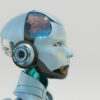
The dream of creating a humanoid robot that closely resembles and interacts like a human has driven scientists, engineers, and companies to push the boundaries of artificial intelligence, robotics, and materials science. Today, several organizations are in a fierce race to develop the most humanlike robots, capable of mimicking human expressions, speech, and movements with astonishing accuracy.
1. Why Build Humanlike Robots?
Before diving into the top contenders, it’s essential to understand why companies and researchers are striving to develop humanlike robots.
-
Social Interaction: The more humanlike a robot appears and behaves, the easier it is for people to interact with it naturally. This is especially valuable in customer service, healthcare, and education.
-
Emotional Connection: A lifelike appearance and human-like movements can make robots more relatable and acceptable in daily life.
-
Functional Versatility: Humanoid robots can integrate into human environments more seamlessly than other robotic forms because they are designed to navigate and manipulate the world as humans do.
Despite these advantages, creating a highly humanlike robot presents significant challenges, including achieving fluid movement, expressive facial animations, and intelligent decision-making.
2. Leading Companies and Innovations in Humanlike Robotics
Several companies are at the forefront of humanoid robotics, each contributing unique innovations to the field.
1. Hanson Robotics – Sophia
Perhaps the most famous humanoid robot, Sophia, was developed by Hanson Robotics. Known for her expressive face and AI-powered conversational abilities, Sophia has been interviewed on TV shows and even granted citizenship in Saudi Arabia.
-
Key Features:
-
Realistic facial expressions powered by AI
-
Conversational AI with learning capabilities
-
Recognition of human emotions
While Sophia is an impressive display of AI and robotics, she is still far from being fully autonomous or functionally equivalent to a human.
2. Engineered Arts – Ameca
Ameca is considered one of the most advanced humanoid robots in terms of realistic facial expressions and interaction.
-
Key Features:
-
Expressive face with smooth and natural-looking movements
-
AI-powered chatbot capabilities
-
Modular design for future upgrades
Ameca represents a leap forward in humanlike interaction but still lacks the fine motor skills needed for complex tasks.
3. Boston Dynamics – Atlas
Unlike Sophia and Ameca, which focus on realistic facial expressions and interaction, Atlas by Boston Dynamics is designed for mobility and agility.
-
Key Features:
-
Advanced locomotion, including running and jumping
-
Superior balance and coordination
-
Use of AI for adaptive movement in dynamic environments
Although Atlas lacks a humanlike face, it is one of the most advanced robots in terms of body movement and agility.
4. Tesla – Optimus (Tesla Bot)
Tesla’s Optimus is Elon Musk’s vision of a humanoid robot designed for real-world labor and automation.
-
Key Features:
-
Optimized for factory work and household tasks
-
AI-based learning to improve over time
-
Fully electric and energy-efficient design
Optimus aims to be a practical humanoid robot that assists with everyday tasks, but it is still in the early stages of development.
3. Technological Challenges in Creating Humanlike Robots
Despite rapid advancements, achieving a fully humanlike robot remains a complex challenge.
-
Artificial Intelligence: Current AI struggles with true understanding, emotional intelligence, and complex decision-making.
-
Fluid Movements: While robots like Atlas demonstrate impressive agility, fine motor control for delicate tasks remains a hurdle.
-
Material Science: Skin-like materials with realistic elasticity and texture are still being developed.
-
Energy Efficiency: Humanoid robots consume significant power, making battery life a critical challenge.
Companies are addressing these issues through deep learning AI, biomimetic engineering, and breakthroughs in robotics hardware.
4. The Future of Humanlike Robots
The next decade will likely bring significant advancements in humanoid robotics, leading to robots that are even more lifelike and capable. Potential developments include:
-
Advanced Emotional AI: Robots that can genuinely understand and respond to human emotions in real-time.
-
Enhanced Dexterity: Improvements in robotic hands to match human-like precision and grip strength.
-
Longer Battery Life: More energy-efficient robots capable of operating for extended periods.
-
Widespread Commercial Use: Robots working in hospitality, healthcare, and personal assistance roles.
Despite ethical and societal concerns, the push toward humanlike robots continues, driven by the potential benefits in numerous industries.
The race to develop the most humanlike robot is heating up, with companies like Hanson Robotics, Engineered Arts, Boston Dynamics, and Tesla leading the way. While these robots have made incredible progress in AI, movement, and appearance, they are still far from achieving human-like consciousness or autonomy. However, as technology advances, we may soon see robots that blur the line between machine and human more than ever before.