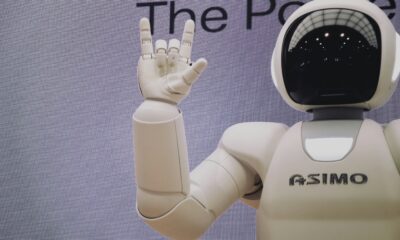
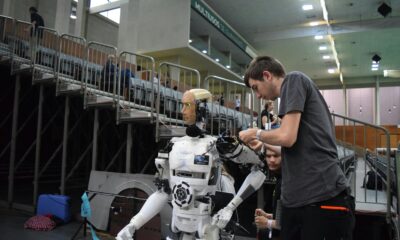
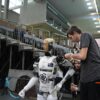
Humanoid robots have evolved significantly over the years, transitioning from rudimentary machines to highly sophisticated, autonomous systems. At the heart of this transformation is a combination of cutting-edge technologies, including sensors, motors, and machine learning algorithms. These elements allow humanoid robots to mimic human movements, interact with their environments, and perform tasks that were once thought to be exclusive to humans.
1. Sensors: The Eyes, Ears, and Skin of Humanoid Robots
Sensors play a crucial role in helping humanoid robots understand and navigate their environments. These sensors allow robots to perceive the world around them, making decisions based on real-time data.
-
Visual Sensors (Cameras and LIDAR): To replicate human vision, humanoid robots are equipped with cameras and Light Detection and Ranging (LIDAR) systems. Cameras provide visual data that allows robots to recognize objects, people, and obstacles in their environment. LIDAR systems use laser light to map the surroundings and create detailed 3D models of the robot’s environment, enabling precise navigation.
-
Proximity and Touch Sensors: These sensors enable humanoid robots to detect objects or people in their vicinity, and in some cases, to physically interact with them. For instance, tactile sensors placed on a robot’s “skin” allow it to sense pressure, temperature, and texture, much like human skin.
-
Motion Sensors (Accelerometers and Gyroscopes): Accelerometers and gyroscopes help robots maintain balance and coordinate movement. These sensors detect changes in position and orientation, which are vital for humanoid robots to walk, climb stairs, or perform other complex movements.
Applications:
-
Object recognition and navigation
-
Collision avoidance and interaction
-
Balance and posture control
2. Motors: Bringing Robots to Life
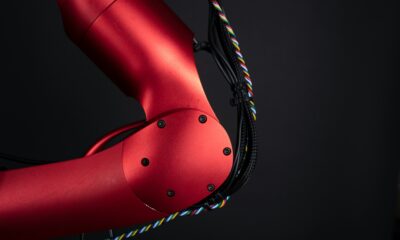
Motors are responsible for the movement of humanoid robots, enabling them to perform dynamic actions like walking, running, lifting objects, or even dancing. The motor systems of humanoid robots are highly advanced, often using a combination of different types of motors for specific tasks.
-
Electric Motors: The most common type of motor used in humanoid robots is the electric motor, which converts electrical energy into mechanical motion. These motors are used to power joints and actuators, allowing the robot to perform precise movements.
-
Servo Motors: Servo motors are a specialized type of electric motor that can rotate a joint to a specific position with high precision. They are commonly used in humanoid robots for fine control of limb movements and posture adjustments.
-
Hydraulic and Pneumatic Actuators: In some cases, humanoid robots use hydraulic or pneumatic actuators, which rely on pressurized fluid or air to generate force. These actuators are typically used for larger movements, such as lifting heavy objects or performing high-force tasks.
Applications:
3. Machine Learning: The Brain of Humanoid Robots
At the core of a humanoid robot’s decision-making abilities is machine learning. Machine learning allows robots to learn from experience, adapt to new situations, and improve their performance over time. Unlike traditional programming, which involves providing robots with explicit instructions, machine learning enables robots to identify patterns and make decisions based on data.
-
Supervised Learning: In supervised learning, humanoid robots are trained on a labeled dataset, which includes inputs and the correct outputs. For example, a robot may learn to recognize objects by being shown images labeled with the names of objects. The robot then applies the patterns it learns to new, unseen images.
-
Reinforcement Learning: In reinforcement learning, robots learn through trial and error. They receive feedback (rewards or penalties) based on the actions they take in a given environment. Over time, the robot learns which actions lead to the best outcomes and refines its behavior accordingly. This type of learning is particularly useful for tasks like walking or object manipulation.
-
Deep Learning and Neural Networks: Deep learning, a subset of machine learning, uses neural networks to mimic the way the human brain processes information. Humanoid robots use deep learning algorithms to recognize patterns, understand speech, and even make decisions based on complex data inputs. These algorithms enable robots to learn from vast amounts of data, enhancing their ability to perform tasks autonomously.
Applications:
-
Object recognition and environment mapping
-
Learning new tasks through experience
-
Autonomous decision-making and problem-solving
4. Integration of Sensors, Motors, and Machine Learning: Making Humanoids Work Together
The true power of humanoid robots lies in the seamless integration of sensors, motors, and machine learning. These technologies work together to enable robots to interact with the world in a human-like way. For example, a humanoid robot may use its visual sensors to identify an object, its motors to pick it up, and its machine learning algorithms to decide how to manipulate the object effectively.
-
Autonomous Navigation: When navigating through an environment, humanoid robots rely on a combination of sensors (such as cameras and LIDAR) to map the surroundings, motors to adjust movement, and machine learning algorithms to optimize their path based on obstacles and changes in the environment.
-
Human-Robot Interaction (HRI): Humanoid robots are designed to interact with humans in a natural and intuitive manner. By using sensors to detect facial expressions, voice commands, and gestures, robots can respond appropriately. Machine learning allows these robots to improve their ability to communicate with humans over time, making them more effective companions or assistants.
-
Adaptive Learning: As humanoid robots encounter new environments or situations, they can use machine learning to adapt their behavior. This allows them to handle a wide variety of tasks, from assisting in a hospital to providing customer service in a retail store.
Applications:
-
Dynamic decision-making in real-time
-
Human-robot collaboration and communication
-
Adaptation to new environments and tasks
5. The Future of Humanoid Robotics: What’s Next?
The future of humanoid robotics is incredibly exciting. As sensors, motors, and machine learning algorithms continue to improve, we can expect humanoid robots to become more capable, efficient, and versatile. With advances in artificial intelligence, robots will not only be able to perform more complex tasks but also work alongside humans in a wide range of industries, from healthcare to manufacturing to entertainment.
In the coming years, we may see humanoid robots that are capable of emotional intelligence, with the ability to read and respond to human emotions. We may also see robots that can perform tasks that require fine motor skills, such as surgery, or those that can assist with complex problem-solving in environments like space exploration.
Humanoid robots will also continue to become more affordable and accessible, with companies and research institutions working toward making these technologies available to a wider range of industries and applications.
Applications:
-
Emotional and social intelligence in robots
-
Advanced medical procedures and surgeries
-
Enhanced problem-solving capabilities in extreme environments
Conclusion:
The science behind humanoid robotics is both complex and fascinating, involving the integration of sensors, motors, and machine learning to create machines that can perform tasks with human-like precision. As these technologies continue to evolve, the potential applications for humanoid robots will expand, offering new solutions for industries and environments that were once considered beyond reach. With continuous advancements, humanoid robots will soon be able to perform tasks autonomously, learn from experience, and interact with humans in increasingly sophisticated ways.